

If your hair is fine, you have probably been told to stay away from hair masks entirely. I heard it for years, both from stylists and from friends with thick hair who assumed my problem was the same as theirs. The advice sounds sensible: fine hair gets weighed down easily, so why add a heavy mask to it? But the real problem was never the mask. It was how I was using it. I spent 14 years behind a department store beauty counter, and in that time I watched women with hair exactly like mine buy expensive masks, use them the way the jar told them to, and then swear off masks forever when their hair came out flat. I did the same thing myself more than once. The fix is not skipping the mask. The fix is changing the routine around it.
I have been using Moroccanoil Intense Hydrating Hair Mask for about eight months now, on shoulder-length, fine, color-treated hair that I have to cover grays on every six weeks. My hair frizzes in humid Ohio summers and gets dry at the ends no matter what I do. The mask did not turn my hair into something it is not. It made the hair I already have look and feel better, and it did it without the flat, greasy aftermath I used to get from every other mask I tried. This is the exact routine that worked for me, step by step, including the mistakes that were causing the problem in the first place.
The mask that finally worked on my fine, color-treated hair
Moroccanoil Intense Hydrating Hair Mask is the one I reach for every week. It conditions deeply without leaving my fine hair flat, and a single jar lasts me months.
Amazon Check Today's Price on Amazon →Step 1: Start with the Right Shampoo and Skip the Conditioner
The biggest mistake I made for years was using a mask the same week I was using a heavy conditioner. My hair was getting two rounds of conditioning, and the second one was always too much. Now I use the mask in place of my regular conditioner, once a week. On the other days, I use my normal conditioner only on the mid-lengths and ends, never on the roots. That one change did more for my hair than any product switch I have made in the last five years.
You also want to shampoo first with something that cleans without stripping. I use a gentle sulfate-free shampoo, and I focus it on my scalp. The lengths of my hair get whatever runs down when I rinse, which is enough. If I use a clarifying shampoo, I do it on a different week entirely, because using a mask right after a clarifying shampoo on fine hair is a recipe for frizz.
One more thing: rinse your hair thoroughly before you apply the mask. I used to apply masks to hair that was still dripping, and the product just slid off. The mask needs damp hair, not soaking hair. I squeeze the water out of my hair with my hands first, then wrap it in a microfiber towel for a minute or two while I do the rest of my shower routine. That leaves my hair damp enough to absorb the mask but not so wet that the product dilutes into nothing.
Step 2: Use a Small Amount, and Only on the Mid-Lengths and Ends
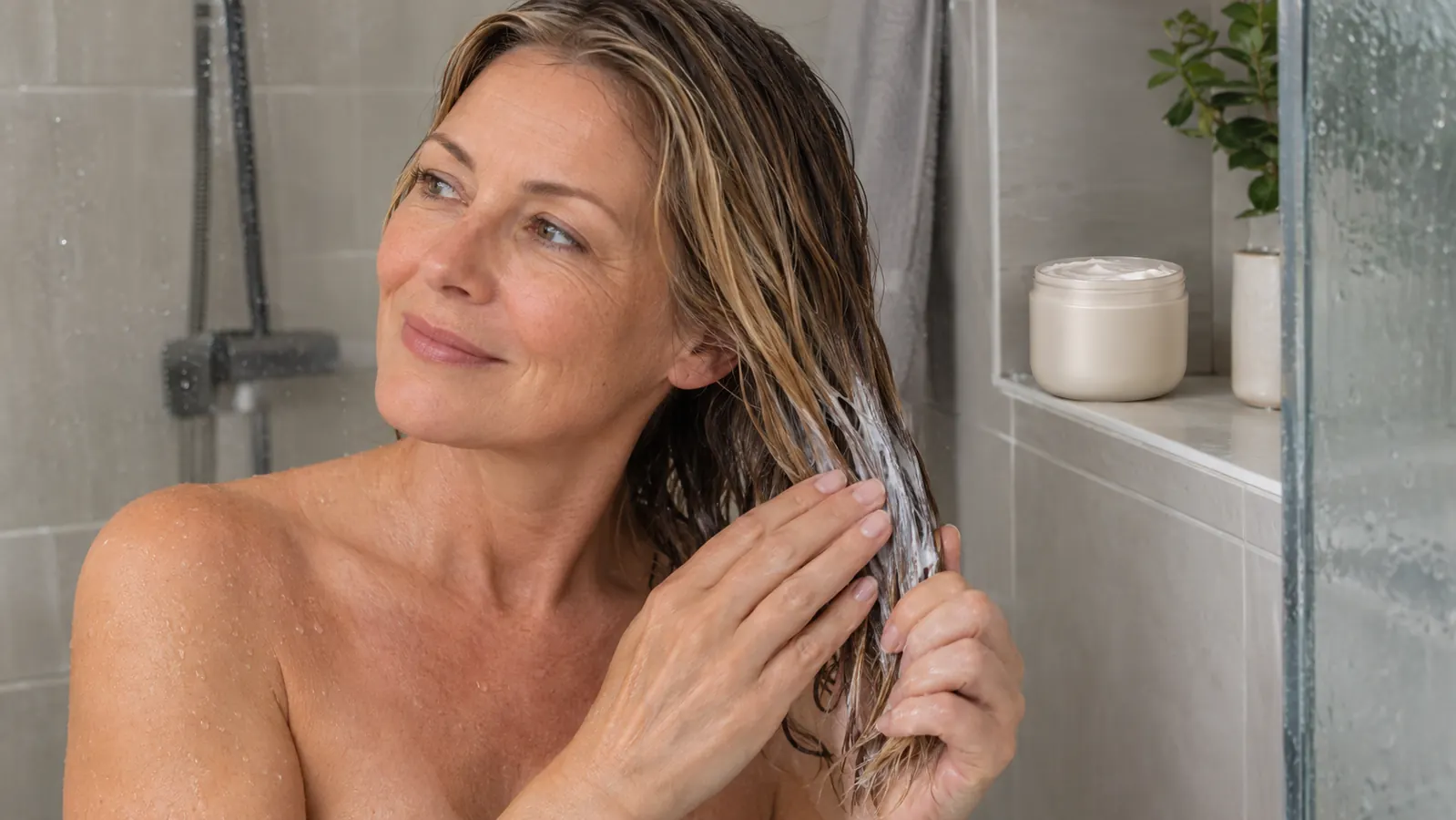
This is the step that changed everything for me. The jar says to apply the mask generously, but that advice was written for someone with thicker hair than mine. For fine, shoulder-length hair, I use about a quarter-sized amount, sometimes less. I warm it between my palms first, which helps it spread more evenly, and then I smooth it onto my hair from about ear level down to the ends. My roots never see this product. Not once.
The reason fine hair gets weighed down is not that the mask is too heavy. It is that the mask is sitting on hair that does not need it. The hair closest to my scalp is the newest, healthiest hair I have, and it gets plenty of oil from my scalp on its own. The ends are where the damage lives, and that is where the mask needs to go. When I stopped putting product on my roots, the flat, greasy look disappeared almost immediately.
If you are not sure how much to use, start with less than you think you need. You can always add more, but you cannot take it back out. I have learned that the hard way more than once, standing under the shower head trying to rinse out a mask I applied too generously, watching my hair get limper with every pass.
Step 3: Let It Sit for 5 to 10 Minutes, Not 30
The instructions on the jar suggest leaving the mask on for up to 15 minutes, and plenty of people online will tell you to leave it on for half an hour or even overnight. I tried the longer times, and my fine hair did not thank me for it. It came out soft, sure, but also flat and a little too slick, the way hair feels when you have used too much product. The sweet spot for me is somewhere between 5 and 10 minutes. That is enough time for the mask to do its work without overloading my hair.
I set a timer on my phone, because I used to guess and always guessed wrong. Five minutes if I am in a hurry, ten if I have the time. I use those minutes to shave my legs or wash my face, so it does not feel like wasted time. The mask does not need to sit for an hour to work. It needs to sit long enough to absorb, and on fine hair that happens faster than you think.
If your hair is very damaged, you can experiment with a longer time, but do it gradually. Try 12 minutes one week and see how your hair feels the next day. The goal is hair that feels conditioned but still has movement. If your hair feels heavy or looks flat the day after, you left it on too long or used too much. Dial it back.
Step 4: Rinse with Cool Water and Squeeze, Don't Scrub
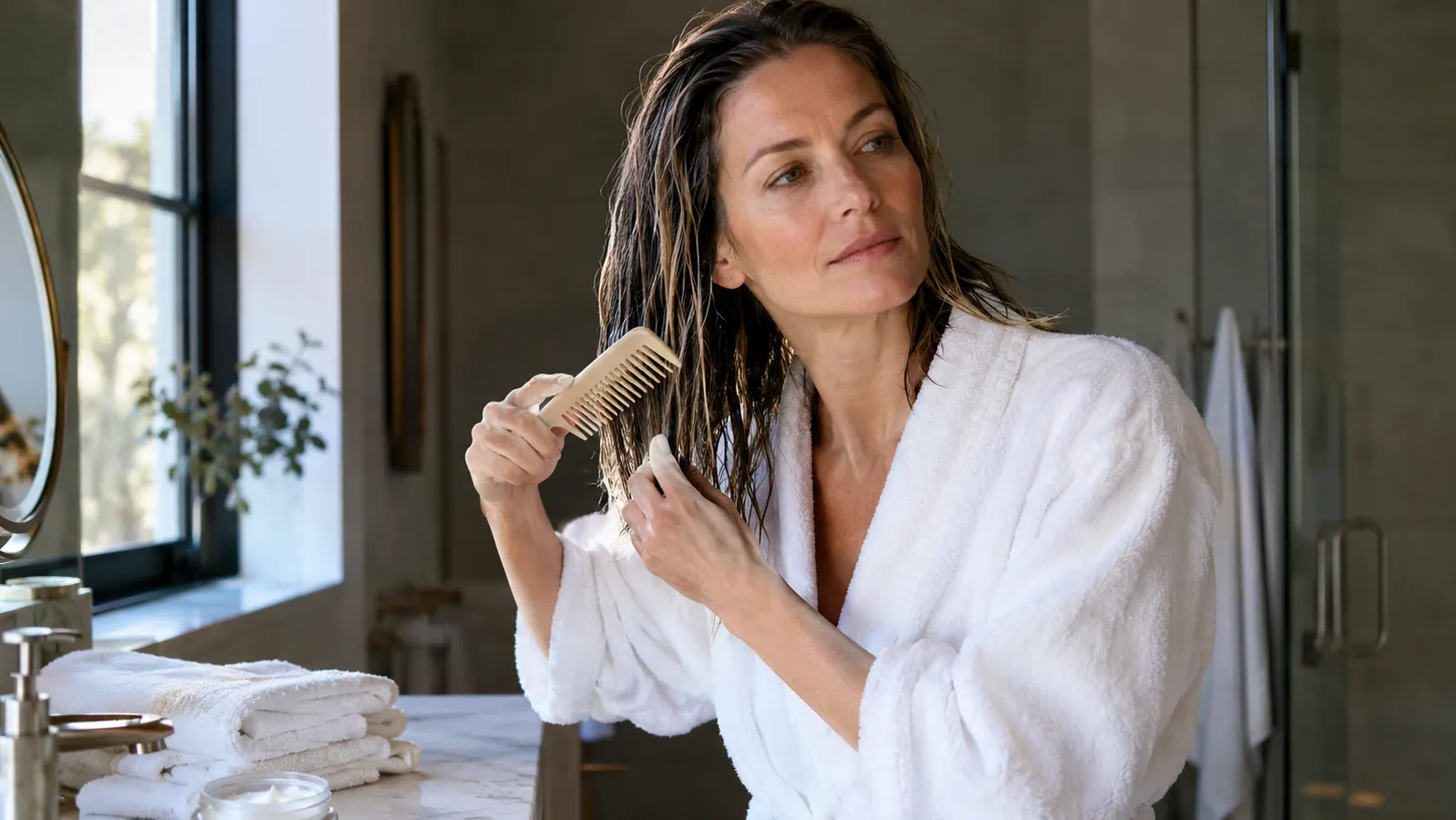
The rinse is where I used to undo all the good work of the mask. I would stand under the hottest water I could stand, scrubbing my hair like I was washing a dish, and then wonder why my hair looked frizzy and dull. Hot water opens the cuticle, which is fine when you are washing, but you want the cuticle to lie flat when you are done. I now rinse the mask out with lukewarm water, and I finish with a few seconds of cool water aimed at the lengths. It is not a pleasant experience in January, but it makes a visible difference in how smooth my hair dries.
I also stopped scrubbing. I use my fingers to gently work the water through my hair, and I squeeze the hair in sections to help the water push the product out. Scrubbing tangles fine hair and roughs up the cuticle, which is exactly the frizz you were trying to fix with the mask in the first place. Think of the rinse as the second half of the treatment, not just the cleanup.
When I think the mask is gone, I give my hair one more squeeze and then wrap it in a microfiber towel. I do not rub the towel over my hair. I just wrap it and let it absorb the water while I put on moisturizer. Rubbing wet fine hair with a towel is another one of those habits that creates frizz no product can fully fix.
Step 5: Finish with a Light Leave-In, Not More Oil
After a mask, my instinct used to be to add a few drops of hair oil to the ends, because that is what I did on every other wash day. With the Moroccanoil mask, that was too much. The mask already leaves my ends feeling conditioned, and adding oil on top of it made my hair look greasy by mid-afternoon. Now I use a very light leave-in conditioner spray on the mid-lengths and ends, and I skip the oil entirely on mask days.
If you have fine hair, you know the feeling of a product that is almost right. Your hair looks good in the morning and falls flat by noon. That is usually a sign that you have layered too many products. The mask is the heavy lifter. Everything else on that day should be as light as possible. A leave-in spray, a wide-tooth comb, and nothing else.
I also changed how I dry my hair on mask days. I let it air dry about halfway before I pick up the blow dryer, and I use a low heat setting with a diffuser. Fine hair that has just been deep conditioned dries faster than you expect, and the less heat I use, the longer the results last. By the second day, my hair still has body, which is the real test of whether a mask routine is working.
What Else Helps
A few small habits made the mask work better for me. I use a wide-tooth comb on wet hair instead of a brush, because brushes stretch fine hair and cause breakage. I sleep on a silk pillowcase, which cuts down on friction and means I can go an extra day between washes. And I wash my hair only two or three times a week, which my colorist approves of and my hair clearly agrees with. None of these things are as important as the five steps above, but they all add up.
I also want to say something about expectations. A hair mask cannot repair split ends, no matter what the marketing says. What it can do is smooth the hair you have, make it more manageable, and help it look healthier between trims. I still get my hair trimmed every eight weeks or so, and the mask is what keeps my ends looking decent in the weeks between appointments. If you are expecting a mask to fix hair that is badly damaged, you will be disappointed. If you are expecting it to make your fine hair feel softer and look smoother without falling flat, this routine will do that.
The mask was never the problem. I was putting it on my roots, leaving it on too long, and rinsing it out with water that was too hot. Fix those three things and fine hair can handle a deep conditioning mask just fine.
Try the routine that finally worked for my fine hair
Moroccanoil Intense Hydrating Hair Mask is the product I have stuck with for eight months. Use the five steps above and see if your fine hair handles it as well as mine did.
Amazon Check Today's Price on Amazon →