
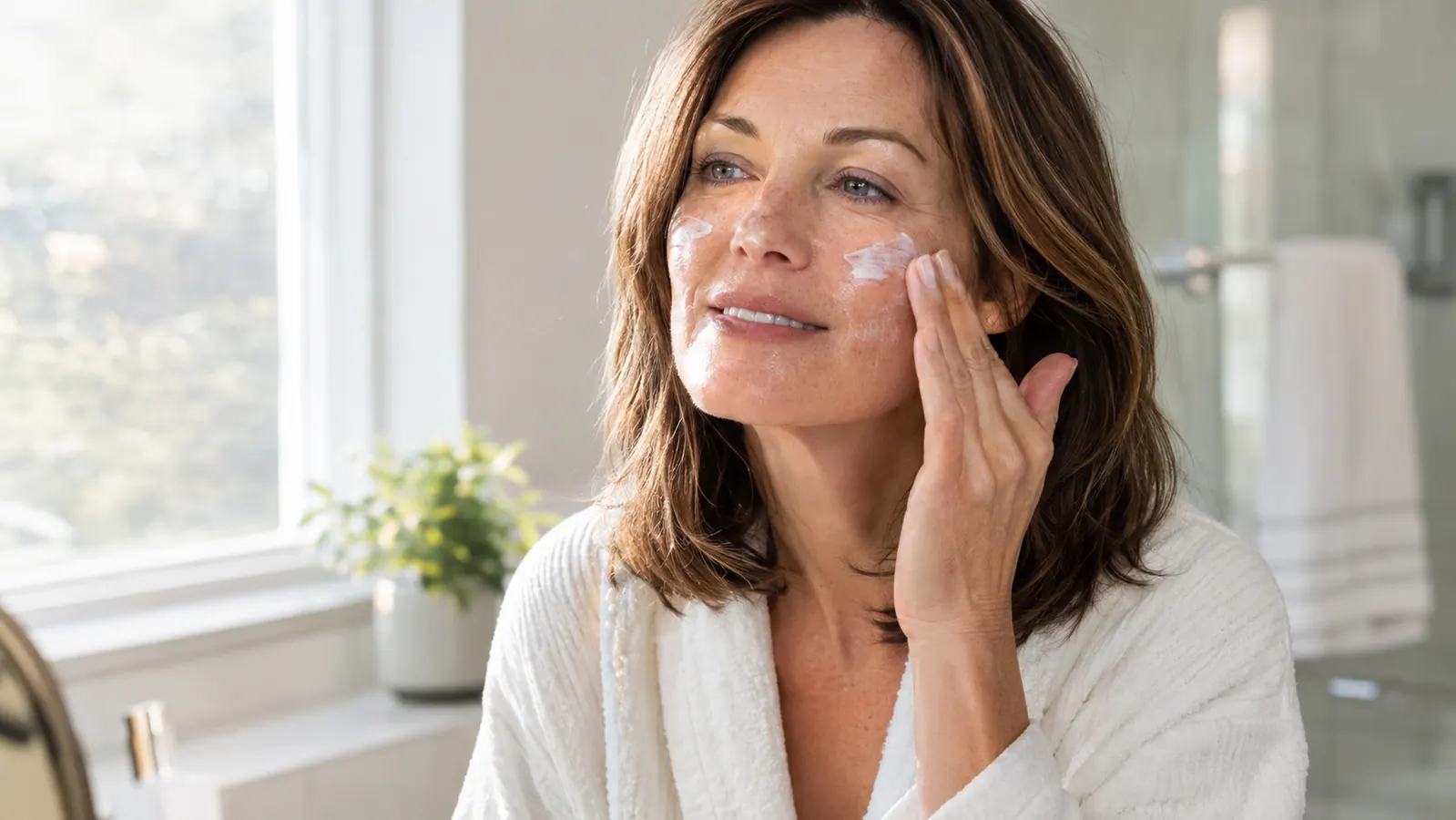
I spent fourteen years behind a department store beauty counter, which means I have recommended roughly a million sunscreens and been asked the same question almost every single day: which one will not feel like sunscreen? Mineral sunscreens were usually the honest answer and also the disappointing one, because most of them sat on top of my skin like a layer of chalk. So when I started testing La Roche-Posay Anthelios Mineral Light Fluid Sunscreen on my own combination skin, I expected to file it under 'good enough, still not great.' Six months later, it has earned a permanent spot in my morning routine, and that surprised me more than almost any product I have tested since leaving the counter.
My skin is the boring kind of difficult: oily across the forehead, nose and chin by early afternoon, dry on the cheeks in winter, and prone to fine lines around the eyes and a few sun spots on my cheekbones that I have been trying not to make worse since my thirties. I burn before I tan, and I live in Columbus, Ohio, where July is basically a wet blanket. A mineral sunscreen has to do three things for me: protect without stinging, dry down without turning me gray, and hold up when I am sweating through the farmers market. This one does all three, with one real catch that I will get to.
The Quick Verdict
The rare mineral face sunscreen that dries down to a natural finish on combination skin and stays put through a humid Ohio summer. The catch: it asks for a patient application and a little more product than you would guess.
Amazon Check Today's Price →A mineral SPF that does not sit on your skin like a mask
After six months of daily use on combination skin, La Roche-Posay Anthelios Mineral Light Fluid Sunscreen is the first mineral formula I have ever finished a full container of on purpose. If you are tired of chalky, greasy face sunscreens, this is the one to try first.
Amazon Check Today's Price on Amazon →How I've Used It
I started testing this in early May, which in Ohio means the weather is still lying to you: sunny and sixty in the morning, humid and eighty-five by three. I used it every single day for the first three months, then dropped back to most days once the novelty wore off and I got honest about what I actually reach for. It goes on after my moisturizer and before anything else. On weekdays that means before a tinted moisturizer or a light foundation. On weekends it is the only thing on my face.
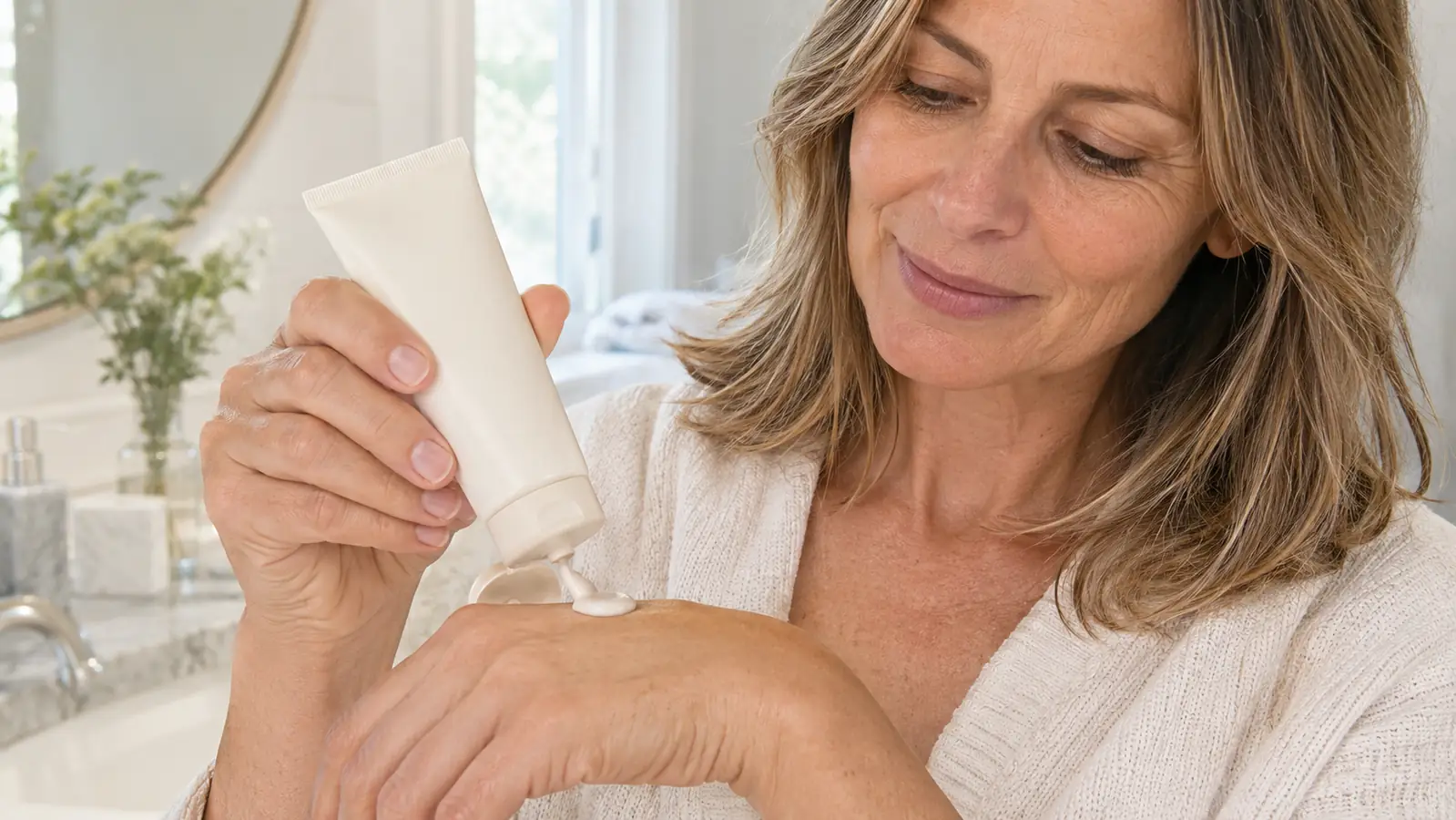
A few drops on the back of my hand, warmed between my fingers, pressed into my face rather than rubbed. That is the whole trick, and I did not figure it out for the first two weeks. The first time I tried it, I rubbed it in the way I would any lotion and ended up with faint white streaks along my jaw that took actual effort to blend away. Once I switched to pressing, the streaks stopped.
I also used it on my neck and the backs of my hands, which is where I actually see sun damage on myself. On long days I reapplied once in the early afternoon by blotting my face first with a tissue and starting over with a light layer. Kayla borrowed it for a weekend in June and texted to ask what it was, which is the highest compliment a product can get from a twenty-four-year-old.
Texture and Finish on Combination Skin
Here is the part every mineral sunscreen review hinges on, so I will be specific. The fluid is thin, closer to a serum than a lotion, and it spreads easily. It dries down in about a minute to a finish I would call softly natural: not matte, not dewy, just skin. My T-zone stays less shiny than it does with most moisturizers, and my cheeks do not feel tight by noon.
The five shade options matter more than I expected. I use the shade closest to my skin tone, and on me it leaves essentially no cast. My daughter tried it on a weekend trip and found her own match in the range, which is the first time that has happened with a mineral sunscreen in this house. That is the thing I never got to say honestly behind the counter: a one-shade mineral sunscreen only works for a fraction of the people buying it.
Under makeup it behaves itself. I have worn it under a light foundation, a tinted moisturizer, and, on one rushed morning, a powder foundation applied with a brush, and it did not pill or slide. That is rare enough that I kept notes. It is also fragrance-free, which my eyes thank me for on days when I sweat it into the corners.
How It Wears Over a Full Day
The honest version: by four in the afternoon, my nose is shiny. That is my skin, and no sunscreen has ever fully stopped it. What this one does differently is that the sunscreen itself does not break down into an oily film. It just fades evenly, and my face looks like my face, not like a melted product.
Humidity is where mineral sunscreens usually embarrass themselves, so I paid attention during the stretch of July when the dew point was somewhere between soup and solid. The fluid stayed put through an hour of walking around the neighborhood and a morning spent hauling flats of tomatoes at the market. It did not run into my eyes until I rubbed my face with the back of my hand, which would make any sunscreen run.
One thing I noticed over months rather than days: the skin on my cheekbones looks calmer than it did last spring. I am not going to claim a sunscreen reversed anything, because that is not how I talk about products. I will say that the sun spots I already have did not get darker, and that is the realistic goal I had when I started.
What Fourteen Years Behind the Counter Taught Me to Look For
When I recommended sunscreens for a living, the first thing I checked was the active ingredients. This one uses zinc oxide and titanium dioxide, the two mineral filters, and it lists them clearly. That matters to me because I have fair skin and a memory of every sunburn from every beach vacation of the nineties.
The second thing I checked was the finish, and for years that is where mineral sunscreens lost me. I lost count of how many customers came back holding a half-empty bottle and saying the same thing: it works, but I cannot wear it every day. A sunscreen you only wear at the beach is a sunscreen you are not actually wearing. The reason this one earned a permanent place in my routine is that it solved the everyday problem first and the SPF problem second, which is the wrong order in theory and the right order in real life.
The third thing was value, and I will be honest that this is where I hesitated. It is not the cheapest mineral sunscreen on the shelf. But I finished the container, which has never once happened with a cheaper mineral sunscreen I bought for myself. Cost per use is the number I actually care about, and on that measure it beat every drugstore option I tested last year. I also put it head to head with Blue Lizard, which I used to recommend from behind the counter, and the short version is that Blue Lizard is tougher for a day at the lake while this one wins on everyday wear. I keep both in the house now.
The Five Shades, and Why Matching Actually Matters
The version of this sunscreen that changed my opinion is the one in five shades. For most of my adult life, a mineral face sunscreen came in exactly one shade, which was usually described as translucent and was not. The five-shade range means the formula is doing something most sunscreens never attempt: it is trying to match real skin instead of pretending one shade fits everyone.
I have tested two of the five shades, the one I bought and the one my daughter grabbed, and both behaved the same way on my skin. That consistency is worth naming, because in cheaper ranges the deeper shades are often thicker or greasier than the light ones. Here the texture held up across the range, which tells me the brand put real work into the formula rather than just adding pigment at the end.
The practical result is that this is one of the few mineral sunscreens I can recommend to a friend without adding the warning 'just be ready for a white cast.' You still have to blend carefully, and you still have to find your match, but the match exists. That alone puts it ahead of most of what I recommended from behind the counter.
The Learning Curve Nobody Warns You About
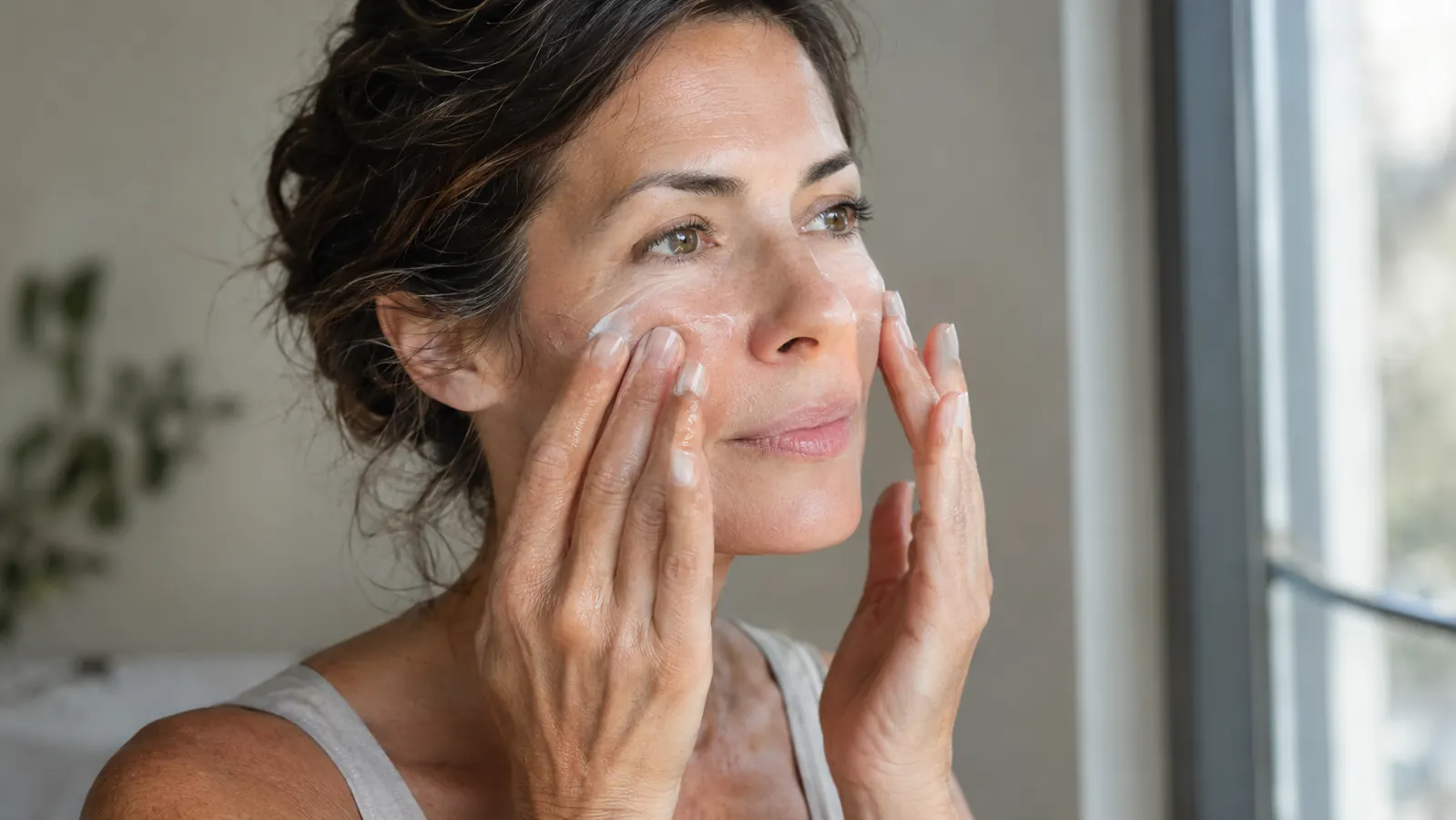
Here is the catch I promised in the opening. This sunscreen asks you to apply it a specific way, and it will punish you if you do not. Rub it in like a moisturizer and you will get faint pale streaks, especially along the jaw and around the hairline. Press it in with clean fingers and it disappears.
It also asks for more than you think. I use about two generous drops per zone, which means four or five drops for my face and neck. That sounds like a lot for a small container, and it is. This is not a dab-it-and-go sunscreen, and if you are someone who wants a five-second morning application, this will annoy you.
Once I accepted the technique, the streaks stopped and the container lasted me about six weeks of daily face, neck and hand use. That is a reasonable lifespan for a face sunscreen I actually remember to use, which is the only kind that counts.
If you are still trying to convince yourself that a mineral face sunscreen deserves a spot in your routine, I wrote up the ten reasons that finally convinced me after years of reaching for chemical formulas. The short version is that my skin tolerates mineral filters better, and this one made the switch easy enough that I never went back.
What I Liked
- Dries down to a natural, skin-like finish on combination skin
- Five shades, so most people can find a real match instead of a white cast
- Holds up through humidity and under makeup without pilling
- Fragrance-free, and it does not sting my eyes unless I actively rub them
- I finished the container, which has never happened with a mineral sunscreen before
Where It Falls Short
- Demands a specific press-and-blend application or it leaves pale streaks
- Uses more product per application than I expected, so it runs out faster than a lotion sunscreen
- Not the cheapest mineral sunscreen on the shelf
- My T-zone still gets shiny by late afternoon, even though the sunscreen itself never breaks down
Six months of daily use and not one white streak, not one pilled layer, not one afternoon where I wished I had skipped it. That has never happened with a mineral sunscreen on my face before.
Who This Is For
This one is for anyone with combination or normal skin who has tried a mineral sunscreen, hated the way it sat on their face, and quietly gone back to a chemical formula. It is for people who wear makeup most days and need something that behaves underneath it. It is for fair-skinned women like me who burn before they tan and want a daily SPF they will actually reach for at seven in the morning. And it is for anyone willing to spend ninety seconds on application instead of twenty.
Who Should Skip It
If your morning routine is three products and a sprint out the door, this one will test your patience. If you have very dry skin, the fluid finish may feel too light and you will want a moisturizer underneath, which I already use. And if you are looking for the absolute lowest price per ounce on a mineral sunscreen, you can find cheaper options, including the Blue Lizard formula I compared it with. La Roche-Posay is not trying to be the cheapest sunscreen. It is trying to be the one you do not mind using every day.
The mineral face sunscreen I actually finished
After six months of daily use on combination skin, La Roche-Posay Anthelios Mineral Light Fluid Sunscreen is the first mineral SPF to earn a permanent spot in my morning routine. If you are tired of chalky sunscreens that sit on top of your skin, this is the one to try.
Amazon Check Today's Price on Amazon →