
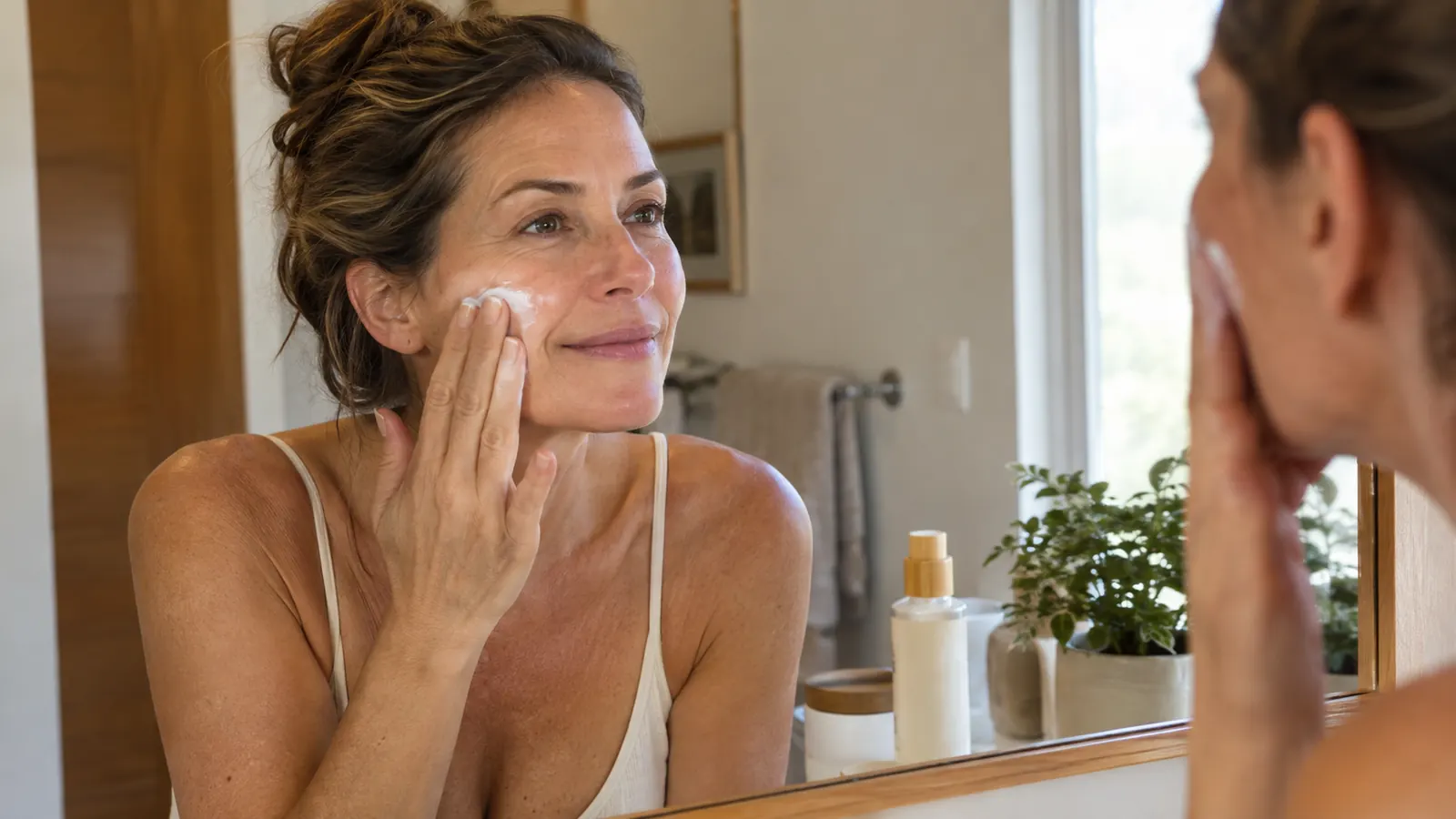
Pilling is the reason most women I know quit wearing face sunscreen. You apply it, give it a minute, then start blending foundation and suddenly your face is covered in little bits that roll off like eraser shavings. So you do what I did for years: you skip the sunscreen and tell yourself the SPF in your foundation is enough. It is not. I spent 14 years behind a beauty counter in a department store, and I have watched hundreds of women go through this exact loop. The sunscreen that finally fixed it for me is the La Roche-Posay Anthelios Mineral Light Fluid Sunscreen, and the reason it works under makeup is half product and half technique.
This is a routine, not a product review. I am going to walk you through the exact order I use on a normal weekday morning, from clean face to finished foundation, and I will tell you where I used to go wrong so you do not have to learn it the slow way. If you have combination skin like mine, an oily T-zone, dry cheeks in winter, and about eight minutes to get out the door, this is written for you.
The sunscreen that finally stopped the pilling
The La Roche-Posay Anthelios Mineral Light Fluid Sunscreen is a thin, weightless mineral formula that sets on its own in a few minutes. It sits under foundation, tinted moisturizer, or powder without rolling, and it is the one I keep in my bathroom vanity. Check today's price on Amazon.
Amazon Check Today's Price on Amazon →Step 1: Start With Clean Skin and Let Your Moisturizer Dry
Pilling rarely starts with the sunscreen. It starts with what is underneath. If you layer a moisturizer that has not sunk in, then a sunscreen, then a foundation, you are asking three separate products to dry at the same time, and they will ball up on each other. So step one is boring but essential: wash your face, apply your regular moisturizer, and then go brush your teeth before you touch the sunscreen. If you are still using a rich night cream in the morning, switch to something light for the day. Heavy creams take twenty minutes to sink in, and you do not have twenty minutes.
I use a light gel moisturizer in the summer and a slightly richer one on my cheeks in winter, and I give it at least a full minute to absorb. If your skin still feels tacky when you press a fingertip to it, you have not waited long enough. This is the step everybody skips on a rushed morning, and it is the step that causes about half of all pilling.
I will be honest about why this matters to me. I skipped sunscreen through most of my twenties and thirties, and I have the sun spots on my cheekbones to show for it. When I finally started wearing it daily, I made the mistake of putting it on after my foundation, and then I blamed the sunscreen for pilling when it was my order that was wrong. Sunscreen goes on after moisturizer and before makeup. The mineral layer has to be the thing your makeup sits on top of, not the thing you smear over everything at the end.
Step 2: Measure Two Finger Lengths and Warm It First
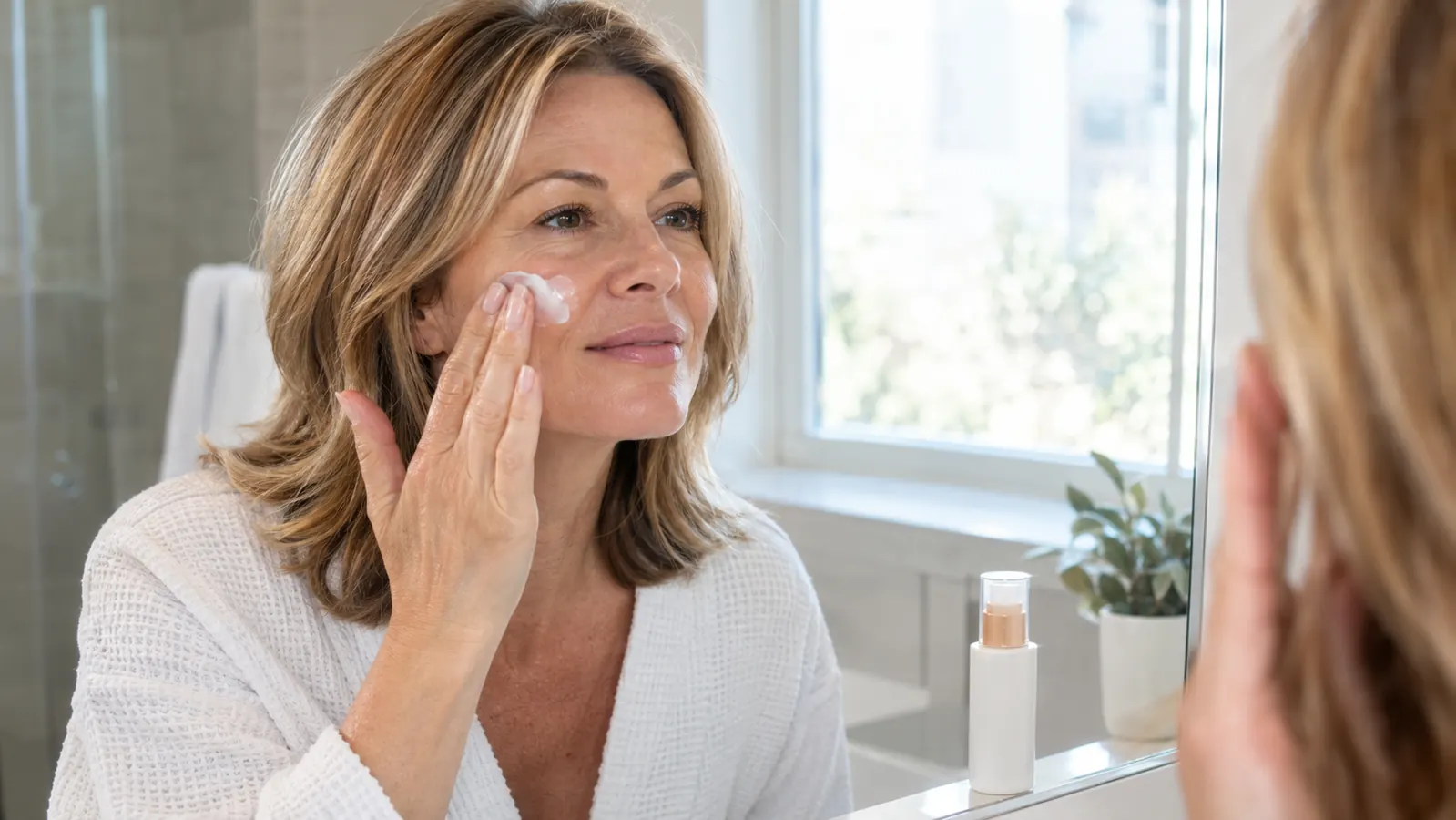
The most common mistake with any face sunscreen is using too little because you are afraid of a chalky finish, or too much because you are afraid of sun damage, and both ends of that mistake pill. The amount that actually protects your face is about two finger lengths of product. With the Anthelios Mineral Light Fluid, that comes out to roughly the size of a nickel. Squeeze it onto the back of your hand first, not directly onto your face, because it is easier to control the amount that way.
This sunscreen is one of the thinnest mineral formulas I have used, and that is a good thing for makeup. A thick paste sits on top of your skin and moves around when you try to blend foundation over it. The La Roche-Posay fluid spreads like a light lotion, and because it is so fluid, a little goes further than you expect. When you squeeze out a big blob, you are setting yourself up for a thick layer that will never dry in time, and a thick layer is a pilling layer.
Warm the product between your fingertips for a few seconds before you apply it. Cold sunscreen does not spread evenly, and uneven patches mean you will keep going back over the same spot, which is exactly how pilling starts. Rub your fingers together until the sunscreen feels like room-temperature lotion, then press the warmth into your face. Also, the Anthelios line comes in five shades, so you can pick the one that disappears into your own skin tone instead of fighting a single shade that never looks right.
Step 3: Press It In Thin Layers, Then Wait Three Minutes
Here is the technique that changed everything for me: do not rub the sunscreen in like it is a lotion. Dot it around your face, then press it in with your fingertips using a light patting motion. Rubbing drags the product back and forth, and every time it drags, it loosens the film that has already started to set. Pressing pushes the sunscreen into the skin without disturbing what is already there, and it leaves a thinner, more even layer behind.
I apply mine in two thin layers instead of one thick one. The first layer goes on my forehead, cheeks, nose, and chin, and I press it in. Then I wait about thirty seconds and press a second thin layer over the areas that see the most sun: my cheekbones and my nose. Two thin layers set faster than one thick one, and they leave less product sitting on the surface for your foundation to grab onto. This is the part of the routine that took me the longest to learn, because it feels like you are not using enough. I figured this out after a full summer of fighting my sunscreen every morning, and it was the single change that made the routine work.
Then you wait. This is non-negotiable. The La Roche-Posay fluid needs about three minutes to set, and I know three minutes feels like a small eternity when you are running late, but it is the difference between a smooth base and eraser shavings. While I wait, I do my eyebrows or brush my hair. By the time I am done, the sunscreen has dried down to a soft finish and my makeup glides over it. On my oily T-zone it sets in about two minutes. On my dry winter cheeks it needs the full three.
Step 4: Build Makeup in Thin Layers With a Damp Sponge
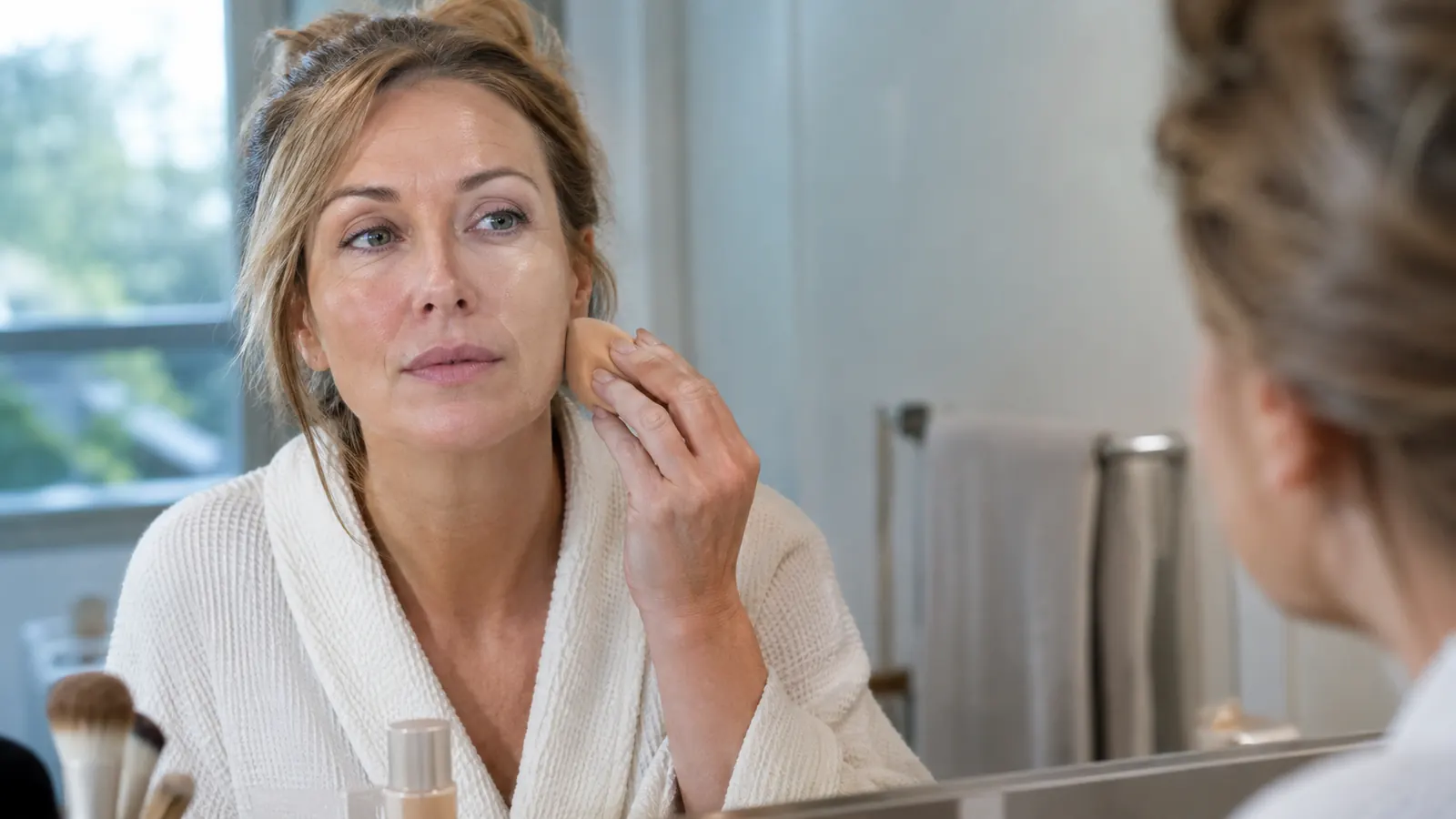
When the sunscreen has set, you treat it like a delicate surface, because that is what it is. A damp makeup sponge is your best friend here. It presses foundation onto the skin instead of dragging it, and the water in the sponge keeps the foundation from grabbing the sunscreen and pulling it up. I use a damp sponge for every foundation I own now, even on the days I only wear tinted moisturizer. My daughter Kayla still applies everything with her fingers and then wonders why it pills. I keep telling her it is the sponge.
Keep your foundation layer thin. One light pass, then check, then add a little more only where you need it. Heavy foundation over a mineral sunscreen is the other big cause of pilling, because the extra product has nowhere to go and it rolls. If you are used to building coverage in three or four layers, cut that down to two and let your concealer do the detail work around your eyes and any spots you want to cover.
A note on primers: most people do not need one under this sunscreen. The Anthelios fluid sets to a smooth, slightly velvety finish, and adding a silicone primer on top of it is how you end up with a face that slides around. If you love a primer, use a water-based one and give it a minute to dry before foundation, but try a few days without one first. I bet you will not miss it.
Step 5: Know How to Fix Pilling When It Still Happens
Even with all the right steps, pilling happens. It happens when the humidity is high, and Ohio summers are humid enough to test every product I own. It happens when you are more rushed than usual, or when you switch moisturizers and the new one does not get along with the sunscreen. The fix is never to rub. Rubbing makes it worse and smears your foundation. Instead, press the little balls away with a clean, dry fingertip, or brush them off with a fluffy powder brush before you set anything with powder. Always fix pilling before you add powder, because powder will seal the little balls into your foundation and you will be stuck with them all day.
If it is truly bad, the honest answer is to start over. I have done it a hundred times, and it takes less time than fighting a pilled face all day. Wash off the sunscreen and makeup, pat your skin dry, and go back in with less product. Usually the culprit is too much sunscreen or not enough drying time, and the second attempt with a lighter hand goes on perfectly. The shame is not in starting over. The shame is wearing a face that looks like it is shedding.
One more thing that helps me on days I am rushing: I keep a tinted pressed powder in my bag. When I am down to four minutes, I apply the La Roche-Posay sunscreen, wait the three minutes, and then dust a light layer of tinted powder over it instead of foundation. It gives a soft, even finish, and I have never once had powder pill over this sunscreen. It is my weekday shortcut, and it is the difference between wearing sunscreen and not wearing it on the days I would otherwise skip it.
What Else Helps
Three small things make the whole routine more reliable. First, blotting papers for the oily part of the day. By mid-afternoon my T-zone gets shiny, and pressing a blotting paper over the sunscreen and makeup is far better than adding another layer of powder, which can start to cake. Second, a setting spray on humid days. One light mist after your makeup keeps everything in place without disturbing the sunscreen underneath. Third, give your skin a little extra time in winter. Cold air and dry cheeks mean your moisturizer takes longer to sink in, so I add about a minute to the wait before sunscreen. None of this is complicated, but each piece removes a reason for the layers to separate. And if you switch foundations, give the new one a test run on a day when you are not rushing. Not every foundation gets along with every sunscreen, and the only way to know is to try them together once, when you have time to start over.
I have worn this sunscreen under makeup every weekday for a year, pressed in two thin layers with a three-minute wait, and it has never once rolled on my face.
If you want the longer version of how this sunscreen holds up over months of daily use, the site has a full review of the Anthelios Mineral Light Fluid that covers wear through the seasons. And if you are weighing it against another mineral option, there is a head-to-head comparison with Blue Lizard that walks through the differences in texture, finish, and how each one behaves under makeup.
Give the routine one honest week
The product matters, but the technique does half the work. If you have been fighting pilled sunscreen for years, try the La Roche-Posay Anthelios Mineral Light Fluid Sunscreen with the routine above for one week and see if your mornings change. Check today's price on Amazon.
Amazon Check Today's Price on Amazon →